


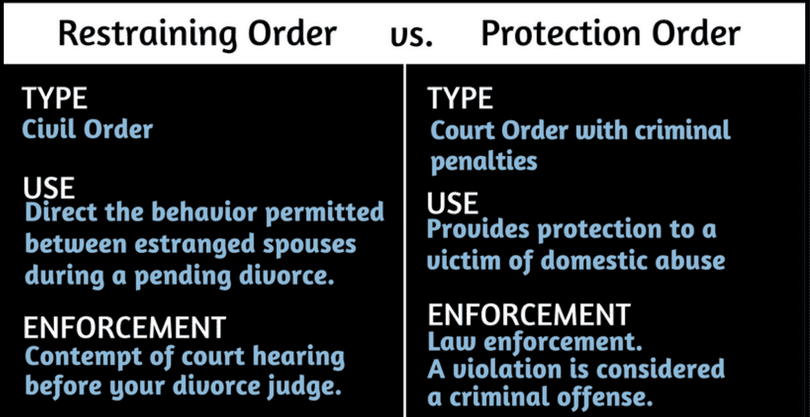
When a survivor of violence receives a Personal Protection Order (PPO) or restraining order, it is often viewed as a lifeline — a legal shield that promises safety from a known threat. The piece of paper carries the authority of a court, the seal of justice, and, for many, a momentary sense of relief. Yet, beneath that promise lies a devastating legal reality: the Supreme Court of the United States has ruled that law enforcement officers have no constitutional duty to enforce a court order to protect any individual.
This precedent, decided in the 2005 case Town of Castle Rock v. Gonzales, remains one of the most consequential and troubling rulings for victims of domestic violence and systemic abuse. The case centered on Jessica Gonzales (now Jessica Lenahan), a mother from Castle Rock, Colorado, who held a valid restraining order against her estranged husband, Simon Gonzales. The order mandated that Simon stay away from her and their three young daughters, and explicitly stated that “police shall use every reasonable means to enforce this order.”
On a June evening in 1999, Simon kidnapped the couple’s daughters Rebecca, Kathryn, and Leslie from Jessica’s yard. Over the next several hours, Jessica repeatedly contacted the Castle Rock Police Department, showed them the restraining order, and begged for help. Officers dismissed her pleas, instructing her to “wait a few hours” or “call back later.” When she finally went to the station in person, she was told to return home and wait.
Hours later, Simon drove to the police station and opened fire. When officers killed him in the ensuing gunfight, they discovered the bodies of Jessica’s three daughters in his truck. Despite a restraining order, despite multiple warnings, and despite a law requiring the arrest of violators, no one had acted in time.
The Supreme Court’s Decision: No Right to Enforcement
In a 7–2 decision, the Supreme Court ruled that Jessica Gonzales had no constitutional right to police enforcement of her restraining order. Writing for the majority, Justice Antonin Scalia reasoned that the Due Process Clause of the Fourteenth Amendment does not guarantee an “entitlement” to government protection from private violence. The Court found that the police possessed discretion — even in the face of statutory language mandating arrest — and that failure to enforce the order did not violate Jessica’s constitutional rights.
In essence, the Court held that the state cannot be held liable for failing to protect an individual, even when that protection is explicitly ordered by a court. The ruling affirmed a broader legal doctrine in U.S. law: that the government’s duty to protect is owed to the public at large, not to specific individuals.
The Implications: Paper Shields and Policy Failures
For survivors of domestic violence, stalking, or coercive control, this decision turned an already fragile safeguard into what many advocates call a “paper shield.” While PPOs and restraining orders remain valuable tools in court proceedings — serving as legal documentation and grounds for future charges — they do not guarantee safety. Police departments may still choose whether to act, and the law provides them immunity if they do not.
The Castle Rock decision also exposed a deeper philosophical divide about state responsibility. How can the government issue an order of protection yet deny responsibility for its enforcement? Victims who rely on these orders often believe — reasonably — that the law will protect them. When that trust is broken, the consequences are not just emotional but fatal. Jessica Gonzales’s case tragically underscores that gap between the promise of protection and the reality of its absence.
Since the ruling, women’s rights groups and domestic violence advocates have fought to reform enforcement protocols. Many states have adopted clearer “mandatory arrest” statutes or improved victim-notification systems. Yet, without federal accountability, enforcement remains inconsistent and dependent on local leadership and discretion.
A Broader Pattern: Systemic Indifference and Institutional Betrayal
The Gonzales case is not isolated. Across the United States, countless victims report violations of protection orders that go uninvestigated or unaddressed. Survivors frequently recount being told to “wait until something happens,” despite repeated reports of stalking, harassment, or threats. This inaction mirrors a pattern of institutional betrayal that extends beyond domestic violence — into cases of child protection failures, sexual assault investigations, and civil rights enforcement.
For many survivors, the system itself becomes a secondary abuser: issuing orders it will not enforce, making promises it will not keep, and leaving victims to navigate danger alone.
The Path Forward: From Legal Fiction to Real Accountability
The fight for reform requires both legal and cultural change. Legislators can begin by closing the accountability gap — ensuring that protection orders carry enforcement obligations backed by penalties for willful negligence. Law enforcement agencies must implement trauma-informed training that prioritizes immediate response and survivor safety. And the public must recognize that protection orders are not a substitute for systemic reform, but a single component of a larger safety network that must include community vigilance, legal aid, and survivor support.
Ultimately, Castle Rock v. Gonzales forces us to confront an uncomfortable truth: the law can recognize your danger, yet still refuse to save you. Until enforcement becomes a right rather than a privilege, survivors remain at risk — and justice remains incomplete.
Further Reading
- Town of Castle Rock v. Gonzales, 545 U.S. 748 (2005)
- Lenahan (Gonzales) v. United States, Inter-American Commission on Human Rights (2011) — finding that the U.S. violated Jessica Lenahan’s human rights by failing to protect her and her children
- National Domestic Violence Hotline: https://www.thehotline.org
- National Network to End Domestic Violence: https://nnedv.org